I Built a Music Engine for My Runs. Then I Found Who Really Needed It.
Why a runner with no spinning experience is building the music tool cycling instructors have been waiting for.
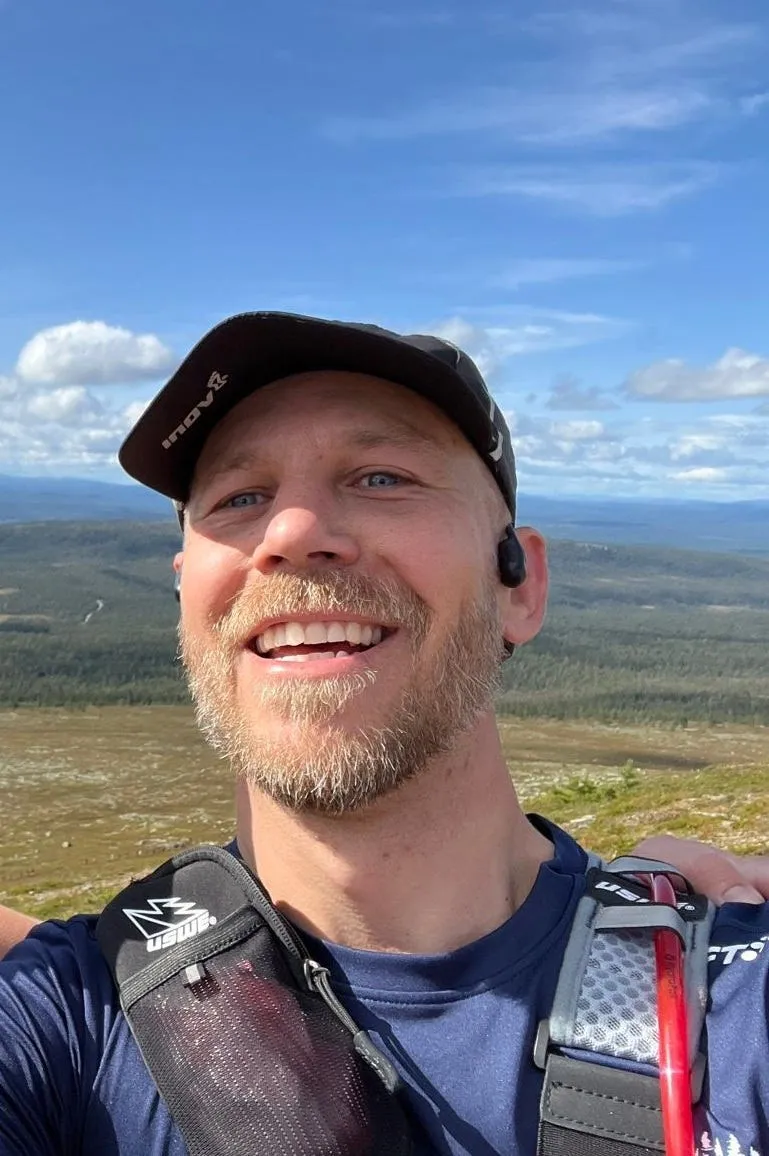
I’m a long-distance runner. Not a spinning instructor. I should probably lead with that, because it matters for the rest of this story.
About three years ago, I got stuck on a problem that seems small but drove me nuts: I couldn’t find music that matched my interval training. Not vibed with it, matched it. I run a lot of structured sessions. Tempo blocks, 3-minute repeats, recovery jogs. And I wanted that locked-in feeling where the beat and your cadence are the same thing, where the music doesn’t just accompany the effort, it pulls you into it.
Generic playlists couldn’t do this. Some tracks were too fast, some too slow, the energy was all over the place. I’d spend time curating something decent and then halfway through a workout the whole thing would fall apart because a mellow track landed right in the middle of a hard interval.
So I did what any developer with more stubbornness than sense would do. I built something.
The version that almost worked
The first Beatpace was basically a Spotify algorithm. It would take a workout structure (warm-up, intervals, recovery, cooldown) and search Spotify’s catalog for songs that roughly matched the BPM, energy, and duration of each block. The output was a Spotify playlist you could listen to through normal channels, even on a Garmin watch.
It kind of worked. Kind of. The BPMs were approximate, not exact. The block durations were whatever song length happened to be close enough; forget about 30-second intervals, that just wasn’t possible. No crossfading between tracks. No real precision. But it was better than shuffling a random playlist and hoping for the best, so I used it for months.
Then in late 2024, Spotify gutted the parts of their API that made it work. The detailed audio features, the track analysis data, gone. The tool I’d built just stopped functioning overnight, because it depended entirely on a platform I didn’t control.
I sat with that for a while. Honestly I was frustrated and a bit defeated. But somewhere in that dead period, an obvious thought finally landed: what if I just made the music myself?
When the music is yours, everything changes
AI music generation had gotten surprisingly good. Not “replace your favorite artist” good, but good enough to create tracks with real energy, clear rhythm, and a solid beat at any tempo you want. And here’s what I didn’t fully appreciate until I tried it: when you own the music from the ground up, you can do things that are flat-out impossible with licensed tracks.
You can stretch a song to hit exactly 142 BPM without it sounding like a chipmunk. You can make a block last precisely 3 minutes and 15 seconds because the music was made for that duration, not awkwardly faded out. You can crossfade between tracks so the transition lands on the beat every single time. You can build a 45-minute session where every block (warm-up, work, recovery, sprint) has music that was selected and mixed to match that exact phase.
And because the music is original, there’s no licensing question. No rights to clear. No terms of service to violate.
That last part opened a door I hadn’t even been looking at.
A community with a much bigger version of my problem
I started reading about indoor cycling instructors. Not casually, deep. Forum posts, Reddit, instructor blogs, community sites like the Indoor Cycling Association and IndoorCycleInstructor.com. And what I found floored me.
These people spend hours every week on music. Not because they want to, because they have to. The workflow is brutal. Browse Spotify for songs with the right feel. Check each song’s BPM on a separate tool. Sort everything into class segments (warm-up, climbs, sprints, recovery) matching tempo and energy to each phase. Load it all into mixing software for seamless transitions. Then quietly worry about whether playing any of this in a commercial class is even legal.
One instructor wrote on the Indoor Cycling Association’s site about keeping a notebook of song ideas across four years of Sunday classes so she’d never repeat a playlist. She admitted she was close to burnout, not from teaching, but from curating.
My running frustration was a mild annoyance compared to this. I wanted better music for my solo intervals. Instructors need it for their livelihood, multiple classes a week, every week, with fresh music every time. And the legal side makes it worse: the maximum copyright fine can hit $150,000 per song. Peloton, worth billions, got sued for $300 million over unlicensed music and had to remove over half their on-demand classes. A freelance instructor teaching at a local gym has zero chance of navigating that.
There are tools that solve parts of this. Some of them solve quite a lot, actually: licensed music libraries with BPM filtering, mixing software that handles crossfades, pre-choreographed programs that bundle everything together. But I couldn’t find a single one that does the full loop: describe your class structure, pick a genre, and get back a finished mix, beat-matched, crossfaded, the right length, and licensed for commercial use. In minutes instead of hours.
That’s what Beatpace became.
Where it actually is right now
I want to be straight about this. Beatpace works, but it’s early. The library covers three umbrella genres with many sub genres right now: dance, rock, and epic. It’s growing fast, and because every track is built for this purpose, even three genres give you more control over your class energy than a Spotify library of millions. The AI-generated tracks are energizing and rhythmically solid, but I’m not going to pretend they compete with hearing your favorite song drop mid-sprint. That’s not the point. The point is music built to match every phase of your class: exact BPMs, seamless transitions, second-precise blocks, and a license that doesn’t keep you up at night.
It still works great for running too. That’s where it started and I use it for my own training every week. But the biggest pain and the biggest opportunity turned out to be somewhere I didn’t expect.
I’m not an instructor. I’ve never led a class. I’m a runner and a developer who built something for himself and stumbled into a problem that affects an entire professional community. I’m learning the indoor cycling world as fast as I can, and the best way I know to learn it is to build with instructors, not just for them.
Right now I’m looking for 20 spinning instructors willing to try Beatpace and tell me what works and what doesn’t, honestly, not politely. Full access, completely free. In return, I’ll ask for a short conversation about your music workflow and what you’d need from a tool like this. That’s it.
If that sounds interesting, sign up at beatpace.io or just reach out at hello@beatpace.io. I read everything.
David is the founder of Beatpace and Runner Twelve AB, based in Sweden. He took a spinning class once, years ago. He’s increasingly aware he’ll need to take a few more.